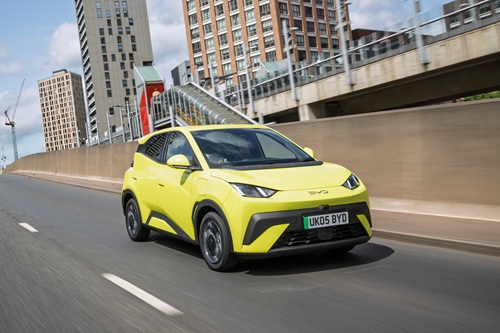
As the number of new cars registered in the UK exceeded two million last year for the first time since the pandemic.
Nearly 500,000 of the new cars sold were electric, according to figures from the Society of Motor Manufacturers and Traders (SMMT).
SMMT chief executive, Mike Hawes, welcomed what he called a “reasonably solid result amid tough economic and geopolitical headwinds”.
But electric car sales were still not increasing fast enough to meet official targets, he said, warning of a growing gap between consumer demand and the government’s ambitions.
Discounts worth thousands per vehicle were “unsustainable”, he said.
In total, 2,020,373 new cars were registered in 2025, the third successive year of growth and the highest total since the pandemic.
However, it was still well short of the 2.3 million sold in 2019.
Electric cars accounted for 473,340 new registrations last year, giving them a market share of 23.4%.
That was a significant increase on 2024, but still below the government’s headline target of 28%, under what is known as the Zero Emission Vehicles Mandate (ZEV Mandate).
The mandate stipulates that carmakers which fail to sell enough electric cars, as a percentage of their overall sales, can face heavy fines.
However, there are concessions built into the rules which can enable them to avoid penalties, for example by reducing emissions from other vehicles in their fleets, or by buying surplus ’emissions credits’ from manufacturers which exceed their own targets.
These ‘flexibilities’ were extended in April, following heavy lobbying by some manufacturers, while the fines for failing to comply were reduced.
Hawes warned that even so, carmakers were having to offer hefty discounts in order to sell enough electric models. The SMMT estimates those discounts were worth more than £5bn last year, or some £11,000 for every electric vehicle sold.
Hawes said this was unsustainable, especially with manufacturers expected to meet a more arduous target of 33% this year. He called on the government to bring forward a planned review of the ZEV Mandate, due to be carried out in 2027.
According to the independent Office for Budget Responsibility, the incentives could generate about 320,000 extra EV sales over a five-year period. But it says the new tax is likely to counteract that by cutting sales by about 440,000 – leading to an overall reduction of 120,000.
The future of motoring looks increasingly costly to drivers.
The cost of fuel (net -46%) tops a list of factors motorists believe will get worse in the New Year, according to new research.
January’s Startline Used Car Tracker shows they also expect to experience more on-road insurance scams (-42%), worse behaviour from other motorists (-38%) and growing traffic congestion (-36%).
Other anticipated issues include higher car running costs (-32%), more difficult parking (-30%), and an increase in speeding and other fines (-22%).
In only one area – electric car charger availability (+56%) – are motorists expecting a net improvement.
Paul Burgess, CEO at Startline Motor Finance, said, “It looks as though most motorists are quite downbeat about almost everything connected to owning and driving a car as we head into 2026. They believe costs will rise, driving will become increasingly frustrating, and even that they are more likely to be targeted by criminals.
“Except for quite visible investments being made in electric car charging infrastructure across the country, they don’t see any bright spots at all.” By Robin Roberts Miles Better News Agency
