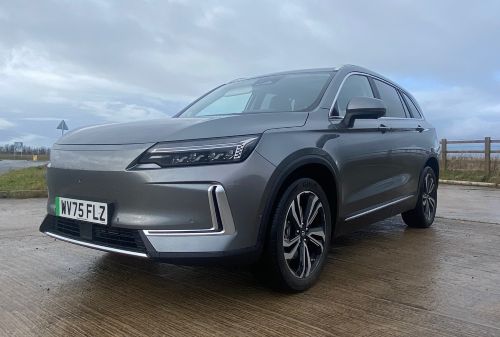
Competition in the UK car market is tough, very tough, and Chinese brand Skywell is ramping up the challenge.
Introduced early 2025, it quickly realised it had to raise its game and this year intensified its sales drive with better driver technology, improved comfort and lower prices helped by ev-grants and importer discounts.
There are under 20 UK dealers for the brand and about a quarter are spread through south and west Wales, where buyers appreciate value for money and the practical features of the Skywell BE11 SUV.
There are just two versions, with a choice of 72kWh Standard or 86kWh Long Range batteries and four colours priced between £32,000 and £35,000.
We tested the LR model with £800 optional 15.6-inch infotainment screen rather than the 12.8-inch standard display.
Skywell is the creation of technology from a Chinese electronics firm and a bus company with a lot of bought in components, including the motor from the better-known BYD automotive company.
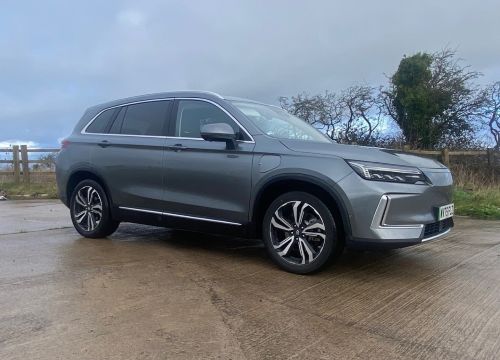
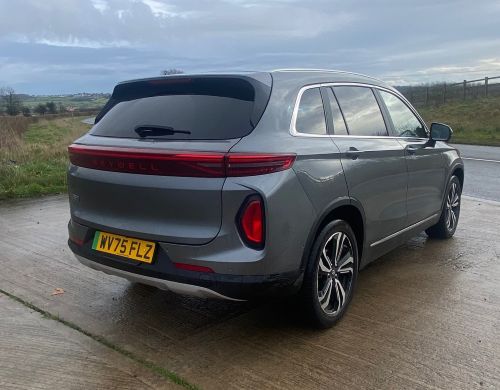
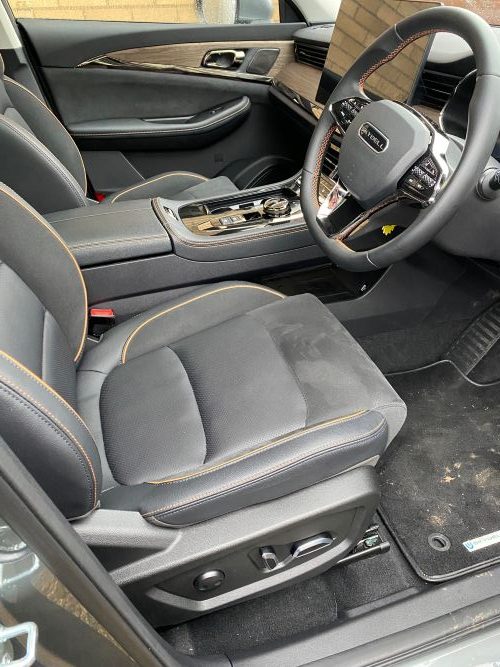
Design-wise, the BE11 SUV resembles the big Volvo XC90 both outside and the interior, and that is not necessarily a bad thing.
As a newcomer without proven history for hesitant buyers, Skywell is pitching in with a good mechanical and battery warranty, so that’s reassuring.
This year’s improvements endow the BE11 with a wide range of driver assistance technology and like Volvo there are overriding features to reduce or even prevent accidental damage or more serious accidents.
Cameras and sensors around the BE11 are constantly looking for threats and alerting the driver, sometimes with repeated and annoying bongs at every approaching and passing speed limit sign, when parking and, as we discovered, with outdated mapping of restrictions.
All these systems have been legislated but in the BE11 they are difficult or impossible to turn off and the complexity of the infotainment system is very distracting when driving and best left to a front seat passenger or reset only when stationary.
That is possibly the only advantage of having the bigger optional screen, you can see the touchscreen icons more easily when you need to alter the settings.
However, even when stopped, the system is not particularly intuitive or easy to work through. You’ll get there, eventually, but it could be made simpler still in a comprehensive update.
The touchscreen allows the driver to adjust steering feel, braking response and regeneration while the driving mode selector on the central console selects normal or sporting modes and the latter is probably the easiest control to use.
Buttons beneath the big screen give instant changes to basic heating and ventilation or more detailed adjustments are made through the screen when safe to do so.
We thought the temperature settings to be unreliable, however, and it struggled to fill the cabin with selected airflow on a constant basis. Four powered windows and a full-length sunroof with partial opening and a big screen were welcome.
The large screen directly in front of the driver was simple, very clear and some information was variable to assist in efficiency.
Oddments room was really good throughout and the MY26 cars have more plug-in points for phones and mobile gamers as well as useful Vehicle2Load functionality to run accessories, but beware of draining the battery if you do.
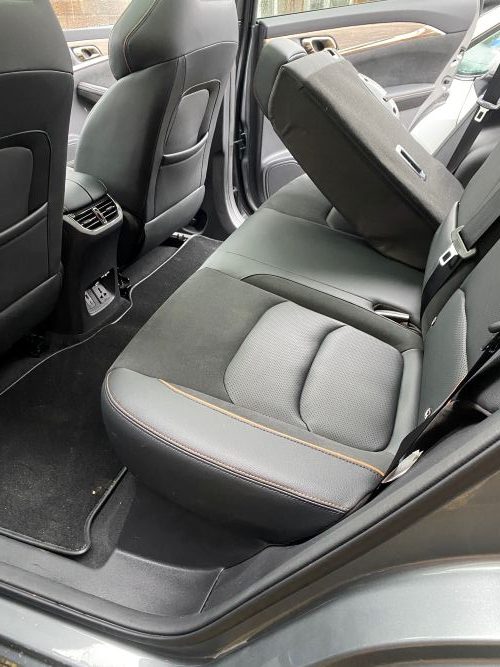
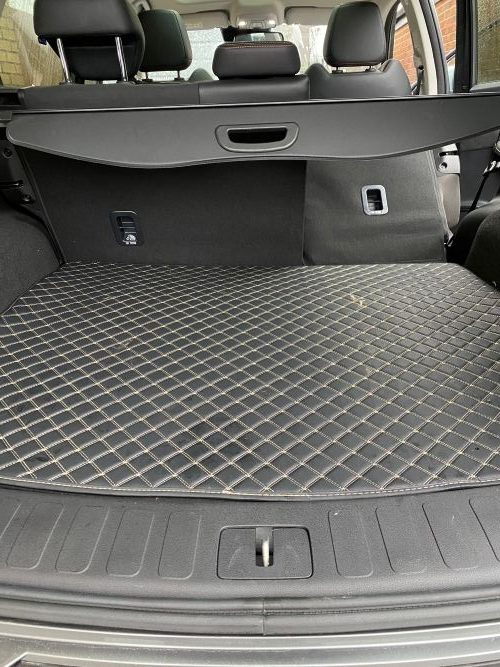
We couldn’t get the rear split-back seats to fold down completely flat so the nominal boot space is a guide only. Under the boot floor is a compartment for power cable and puncture repair kit and the knee-high loadbed was wide, sensibly shaped and deep.
Access to the cabin was very good with a nice amount of headroom and inside the deeply padded and shaped seats throughout with six-way power adjustment, heating and ventilation infront were supporting and helped locate during hard cornering. Head and legroom was very good but we found a driver’s left foot could touch the turning steering column unless rested well to the left in the well.
Sitting so high above other vehicles meant visibility was generally good with slim roof pillars and good washers and wipers both ends. However, the headlights were disappointing on spread and strength.
Although you can adjust the charging time, the BE11 is not as rapid as rivals can be and an overnight boost on a 7.4kW point works out as an hour for 20 miles, so best used in conjunction with cheap-tariffs.
At nearly two-tonnes, the BE11 LR gave average acceleration performance and composed maximum ability on main roads and motorways. It was comfortable on major roads but the suspension damping was too strong in our opinion and it was thrown about by mid-corner bumps compromising handling.
The steering ratio was useful in town when parking but the feedback was not delicate when directional changes were required and after electrical retardation we found the brakes a bit soft unless given a really hefty shove, not ideal on very wet or wintry surfaces.
So, there are a few practical irritations and comfort shortcomings to the Skywell BE11 LR. If you want a roomy SUV with a good warranty it is worth considering, but be prepared to haggle over the price even after the standard discounts are applied as competition is getting tougher.
FAST FACTS
Model: Skywell BE11 LR SUV
Price: £35,790
Mechanical: 201bhp/150kWh motor, 85kWh battery, front wheel drive
Max Speed: 92mph
0-62mph: 9.6ses
Range: 240 miles
Insurance Group: 43
CO2 emissions: Zero
Bik rating: 3%, VED £10 FY, £195SR
Warranty: 7yrs/ 100K mechanical, 8yrs/ 155k battery
Size: L4.72m, W2.18m, H1.70m
Bootspace: 689 litres
Kerbweight: 1930kg
For: Very roomy cabin, good-sized boot, comfortable seats, average performance, compliant ride, discounts available
Against: Slow recharging, unintuitive technology, poor headlights, road and suspension noises. By Robin Roberts Miles Better News Agency
