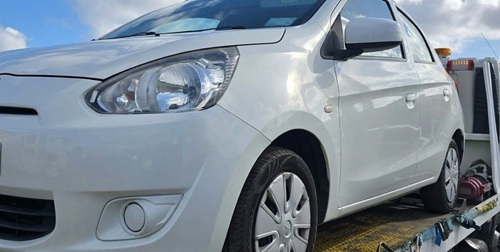
Sooner or later, every car hits the point where fixing it costs more than it’s worth. Maybe it’s been in a crash, the gearbox has gone, the rust has won, or it’s just worn out.
Either way, the car isn’t worthless. There’s still a lot of good metal and plenty of working parts in it, and that’s where car wreckers come in.
They take unwanted cars apart so the parts can be used again and the steel, aluminium and other metals get recycled instead of dumped.
A dead car isn’t dead all over
A car that’s no longer worth keeping on the road can still have a lot going for it. Take one with a blown engine: the doors, mirrors, lights, wheels, seats, suspension and much of the electrics might be perfectly fine.
Same with a crash-damaged car. The front end’s a mess, but the back half may not have a scratch on it. That’s why dismantling matters. Crushing a car whole would waste all of that.
First, someone has a look at it
Before anything comes off, the car gets looked over to work out what’s worth saving and what’s only good for scrap. Age, model, condition and the type of damage all play a part.
Popular models make the best donors, because owners of the same generation keep needing replacement parts. Anything with resale value is removed carefully rather than the whole car going straight to the crusher.
Fluids come out early
Cars are full of things that shouldn’t end up on the ground: engine oil, coolant, transmission fluid, fuel, the battery and the air-con gas.
All of it has to be drained or removed and dealt with properly before the real dismantling begins.
Once that’s done, the parts that can go on to another car come off next.
Parts that get a second life
People have been fitting used parts for as long as there have been cars. If you own an older one, a secondhand part is often the only sensible choice, since a new one is either impossible to find or costs more than the car is worth.
Engines and gearboxes are the obvious examples, but the list is long: headlights, tail lights, doors, bonnets, bumpers, mirrors, alternators, starter motors, wheels, seats, switches and interior trim.
If you’re restoring something rare, a wrecked donor car can be the only place left to find parts that aren’t made any more.
What happens to the shell
With the useful parts stripped out, what’s left is still mostly metal. The shell gets processed so the metals can be separated and recycled.
Steel is the big one, because it goes back into manufacturing rather than landfill. Other materials get sorted out too, depending on what the recycling facility can handle.
It’s why even a car that won’t move still has some value.
Newer cars are harder to deal with
Recycling is getting trickier as cars get more complicated. Modern vehicles are packed with electronics, sensors, cameras and control modules.
Hybrids and electric cars add high-voltage batteries and motors, which take specialist training and proper safety procedures to handle.
As the first large wave of EVs gets older, recovering those batteries and the materials inside them is going to be a much bigger part of the job.
Why reusing parts is worth it
Building a new part takes raw materials, energy, transport and processing. Keeping an existing one in service skips some of that.
It’s practical for drivers too. Used parts keep older cars affordable to run when a new part would make the repair pointless.
Not every part is a good candidate, though. Safety-critical components need extra care, and whatever you buy should suit your car and meet any rules that apply where you live.
The bigger picture
Car makers are paying more attention to recycled content, repairability and what happens to a car and its battery once it’s done.
Meanwhile, dismantlers keep doing what they’ve always done, pulling useful parts out of cars that would otherwise be scrap.
So a car stops running, but its alternator might still be turning in someone else’s car years from now, and its steel could end up in something completely new.
