
Polestar has offered a glimpse of its future design philosophy with the unveiling of the Formula 2030 concept car. The striking concept serves as a physical interpretation of the Swedish electric performance brand’s wider Formula 2030 strategy, transforming its long-term vision into a bold and tangible automotive statement.
A bold evolution of the design DNA so firmly established since the very start of Polestar, the Formula 2030 concept is the first showcar created under the leadership of Head of Design Philipp Römers. Working with the original Polestar formula to remove the unnecessary, improve what remains and refuse to compromise, the Formula 2030 concept embodies the evolved values that define the brand: design, performance, and sustainability.
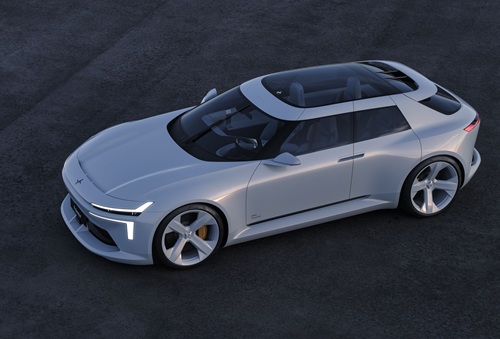
The compact practical four-door sports car sits within its own segment, 4,680 mm long, 2,021 mm wide with a 2,780 mm wheelbase, and roof height just 1,350 mm from the ground – even lower than the Polestar 5 Grand Tourer. That positions the car somewhere between the forthcoming Polestar 2 and Polestar 7 dimensionally, and takes inspiration from the recently launched Polestar 4 SUV for its hint towards low-slung practicality.
Viewed from the side, the proportions deliberately express power and performance, with a modern evolution of the classic cab rearward stance set into powerful rear haunches. The long bonnet, short overhangs and 22-inch wheels continue the expression while in plan-view the typical Polestar shape, with coke bottle hips and power visually weighted to the rear, is particularly evident.
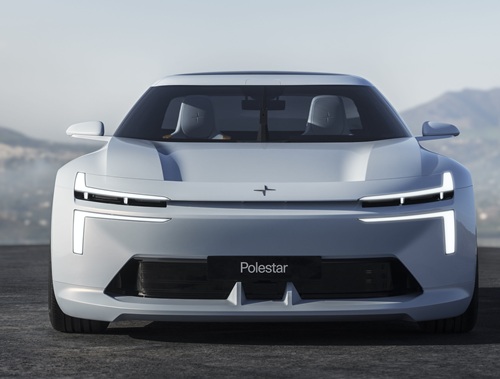
Its signature Dual Blade headlights provide the Formula 2030 with an instantly recognisable Polestar character, previewing the face of the next generation Polestar 2 planned for 2027. With inspiration from the Polestar 3, the Dual Blades are neatly integrated into a front aero wing to maintain a strong Polestar identity and amplified presence. The shark nose emphasises performance with a deep front splitter anchored to the body through a central spine. The showcar is unmistakably focused, low and with purpose to its wide stance, confirming its performance credentials.
Continuing through the central spine is an individual, vertically orientated windscreen wiper, aping motorsport cars old and new, mounted on a visor-like wraparound windscreen that pays homage to the first generation Polestar 2. A concealed LiDAR unit, hidden beneath an aerodynamic shroud when not in use, reveals itself when the driver is making use of the Formula 2030 concept car’s autonomous drive capabilities. Behind sits the familiar guiding star symbol projected into the panoramic glass roof.
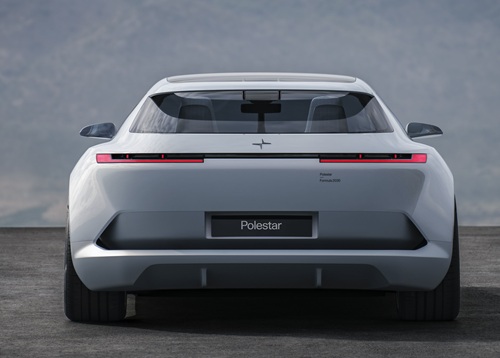
At the UFO-esque rear, Formula 2030 ushers in a new era of lighting signature, with the now ubiquitous lightbar removed and Polestar’s Single Blade rear lights introduced ahead of series production. Instantly recognisable, the rearward down-the-road graphic is a bold evolution of the geometric shape and sharp angles that have come before.
Like the front screen the rear glass also looks to wrap around the car into the shallow side glazing, intersected only by the strong C-pillar running from powerful rear haunches into the roof, expressing solidity and performance. The rear wing is affixed centrally via lit mounts, while the lower rear diffuser points to the considered aerodynamics and downforce for the powerful electric concept.
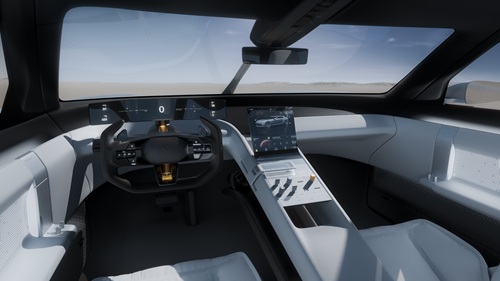
The Formula 2030 concept continues its evolution and inspiration mission with a performance-focused cockpit concentrated towards the driver. At the centre of attention is the 20-inch HyperDIM, a precisely curved Driver Information Monitor, mounted directly to the steering column always ensuring optimum focus for the driver. The 12.2-inch Centre Screen Display (CSD) is integrated into the gently rising centre tunnel, which is designed to emphasise the importance of the driver’s primary position in the vehicle.

The horizontal interior band, similarly seen in Polestar’s production cars, wraps around the driver before flowing through the rest of the cabin bathed in indirect lighting. These design attributes point towards future Polestar interiors and provide the clearest indication of what comes next for the brand.
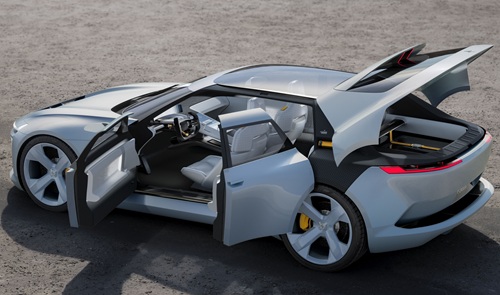
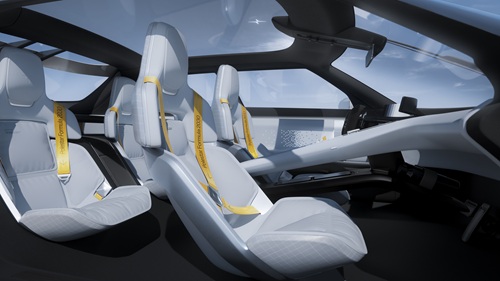
The Air Inflatable bolsters and cushions of the four individual seats mould themselves to each occupant for optimum lateral and longitudinal support and are deliberately positioned low-down in the cabin to provide a performance-focused seating position.
Three different drive modes, Performance, Normal and Autonomous, are selected by sliding the drive mode selector forward through the plane of the centre console. By doing so the physical attitude of the CSD and driving position are influenced to reflect the mode chosen. In Autonomous mode the CSD remains upright and proud of the upper IP, providing easily read information relevant to that chosen setting while the seat and steering wheel move away from each other as the vehicle takes more control. As the driver moves through Normal mode to Performance, the CSD lowers further and sits flush into the surface while the steering wheel – and HyperDIM – pull themselves closer to the driver’s chest, optimising the cabin for enthusiastic driving.

Polestar is committing to rebalance the mix of physical and digital with a mechatronics solution for its controls, thanks to a panel of physical controls positioned below the CSD. Entirely customisable, both physically – allowing users to choose between different types of control such as rocker switches or rotary controllers – and digitally, these eight controls provide quick and easy access to the most used functions in the car. Individual hot keys can also be programmed to provide user-defined functions.
GR Snippets
- New concept car, Formula 2030, designed under Head of Design Philipp Römers revealed
- Formula 2030 concept is the physical manifestation of the Formula 2030 strategy
- Concept points towards future design direction for the brand, inspired by cars that came before it and shaping those that will come next
- Bold evolution of established brand formula to remove the unnecessary, improve what remains and refuse to compromise
- Compact, low, practical sportscar with a performance focused exterior, driver-focused mechatronic interior layout and next generation materials and finishes in tone-in-tone colours
- Various design attributes from Formula 2030 confirmed to appear in production next generation Polestar 2 and forthcoming Polestar 7
